Why Has My Cat Stopped Using the Litter Tray?
Your house does not have to smell like a cat.
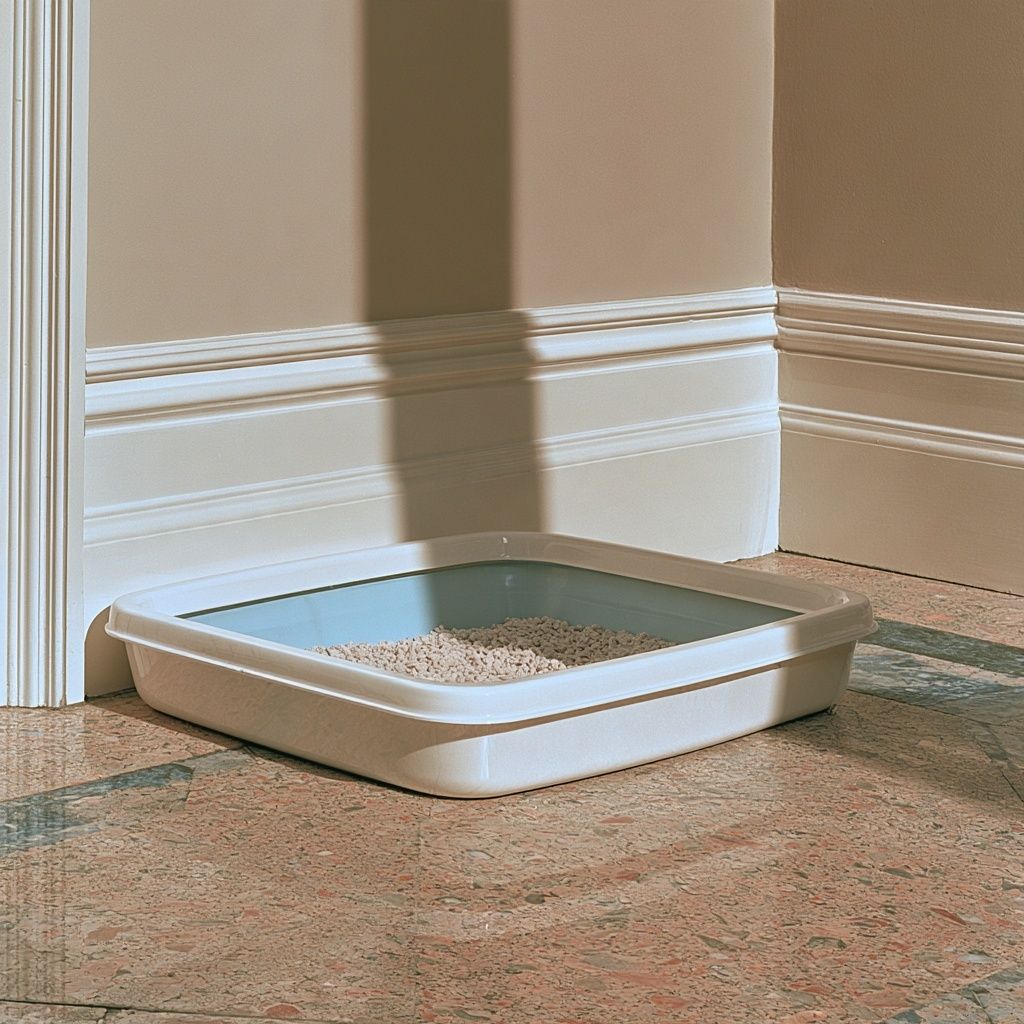
Your house does not have to smell like a cat.
If it does, the fault lies with the setup, not the animal. And if your cat has abruptly traded their designated box for the bath mat, the guest bedroom floorboards, or the quiet corner behind your armchair, they are not acting out of malice.
Cats do not engage in psychological warfare. They communicate.
The cat is always the client, and right now, your client is filing a formal, urgent grievance regarding bathroom working conditions.
When a cat rejects their tray, there is always a mechanical, medical, or sensory reason. Here is how to diagnose the breakdown and resolve it without forfeiting your tenancy deposit. Five checks, in the order that matters: health, size, litter, cleaning, placement. Most cats are back in the tray within a week of the right fix.
1. Rule out a medical problem immediately
Before adjusting dimensions, rearranging furniture, or swapping substrates, verify whether you are dealing with a medical emergency.
If your cat is straining, making repeated visits to the box with little or no result, crying out mid-crouch, or obsessively grooming their hindquarters, close this tab and ring your vet. In male cats particularly, a urinary blockage can turn fatal within twenty-four to forty-eight hours. A male cat straining to pass urine is an emergency now, not tomorrow morning. If your vet is closed, our emergency numbers are here.
Even a routine urinary tract infection or a bladder cyst complicates the picture. Lilou developed a cyst that altered her bathroom habits before any dramatic signs appeared. Catching it early made the difference.
When urination hurts, a cat draws a simple conclusion: the box is inflicting the pain. Seeking relief, they migrate to softer surfaces, like a duvet or a folded wool blanket. Treat the inflammation, and the spatial logic typically restores itself.
2. The golden ratio: sizing and spatial geometry
Most commercial litter trays sold in the UK are built to suit human cupboards, not feline anatomy.
A cat requires a tray at least 1.5 times their length, measured from the bridge of the nose to the base of the tail. If an adult cat must hunch their spine, brush against a cramped plastic hood, or perform a clumsy three-point turn simply to dig, they will eventually boycott the arrangement.
Take note of post-toilet habits. If your cat obsessively scratches the surrounding skirting board or paws at the wall beside the box, they are not being theatrical. They are trying to wipe their paws or complete their burial ritual, and the sides are either too cramped or too shallow.
A spacious, high-sided open box eliminates the problem. It provides clean sightlines, plenty of turning clearance, and contains displaced granules without trapping them under a stifling hood.
And count your trays. The rule is one per cat, plus one. Two cats need three.
Not sure your tray passes? Our Litter and Litter Trays guide has the sizes, the brands worth buying and what each type really costs.
3. The substrate: clumping vs non-clumping
The material sitting inside the tray determines whether your cat views it as an intuitive territory or an obstacle course.
| Litter type | What actually happens |
|---|---|
| Non-clumping | Urine drains straight to the plastic base, pools, and saturates the pan within 48 hours. Stepping in it is a sensory trial for sensitive paws. |
| Clumping (unscented) | Moisture locks immediately into firm, compact clumps. The base stays clean; paws stay dry and scent-neutral. |
Cats possess a sense of smell around fourteen times sharper than ours. Non-clumping substrates retain lingering ammonia even when solids are scooped. Scented crystals and synthetic florals do not mask this for the animal; they simply layer artificial perfume over decaying moisture.
Choose a fine-grained, unscented clumping litter. It mimics natural soft soil underfoot and allows for clean removal.
4. The daily cleaning protocol
If you left your own plumbing unflushed for seventy-two hours, the result would hardly surprise you. Expecting an animal obsessed with scent boundaries to step into yesterday’s waste is poor management.
The baseline:
- Daily scooping. Clear out solid waste and urine clumps every single day without exception. In multi-cat homes, scoop morning and evening.
- The full reset. With a good clumping litter and daily scooping, empty the tray, wash it with mild unscented soap and refill it every two to four weeks. Non-clumping litter needs a complete change and scrub every week.
- Disposal warning. Never rinse or tip clumping litter down household sinks, showers, or toilets. It expands in water and sets like concrete inside pipes. Bag it and bin it.
5. Territory and household placement
Where the tray sits is just as consequential as the substrate inside it.
Avoid positioning the box in high-traffic corridors, behind doors that bang open unpredictably, or immediately next to an active appliance. A spinning washing machine turns an essential routine into a perceived threat.
Equally important: separate their territory. No predator in the wild willingly eliminates near their primary feeding station or fresh water source. Keep meals, water and litter trays in separate zones of the home.
Respect the boundary, maintain the ritual, and your cat will gladly return to the tray.
Check your dryer before every use. It takes three seconds, and it saves lives.